
How Often Should You Treat a Timber Cabin?
How Often Should You Treat a Timber Cabin?
Once a cabin is up and being used, the question that comes back to us most often is a practical one: how frequently does the timber actually need re-coating? People have usually heard everything from "every year without fail" to "the factory coat lasts forever".
As a working rule for the UK climate, expect to re-coat the exterior every three to five years, with the first maintenance coat often due earlier than that — and with sheltered elevations lasting considerably longer than exposed ones. The interior, protected from rain and UV, may never need more than an occasional refresh.
That range is wide for a reason, so here is what actually moves it.
What Changes the Interval
The product you use. Modern breathable stains and micro-porous paints wear back gradually and are simply re-coated over a cleaned surface. Older film-forming varnishes crack and flake, which means stripping back before you can recoat — far more work. Choose the finish for how you want to maintain it, not just how it looks on day one.
Which way the wall faces. South and west elevations take the sun and the prevailing wet weather, and they will always need attention first. It is completely normal for one wall to need a coat while the others have another two years in them — treat what needs treating rather than waiting to do all four at once.
How exposed the cabin is. A cabin tucked behind a fence and a hedge weathers far more slowly than one standing in open ground or catching coastal wind. Sites near the sea are harder on finishes than almost anywhere else in the UK.
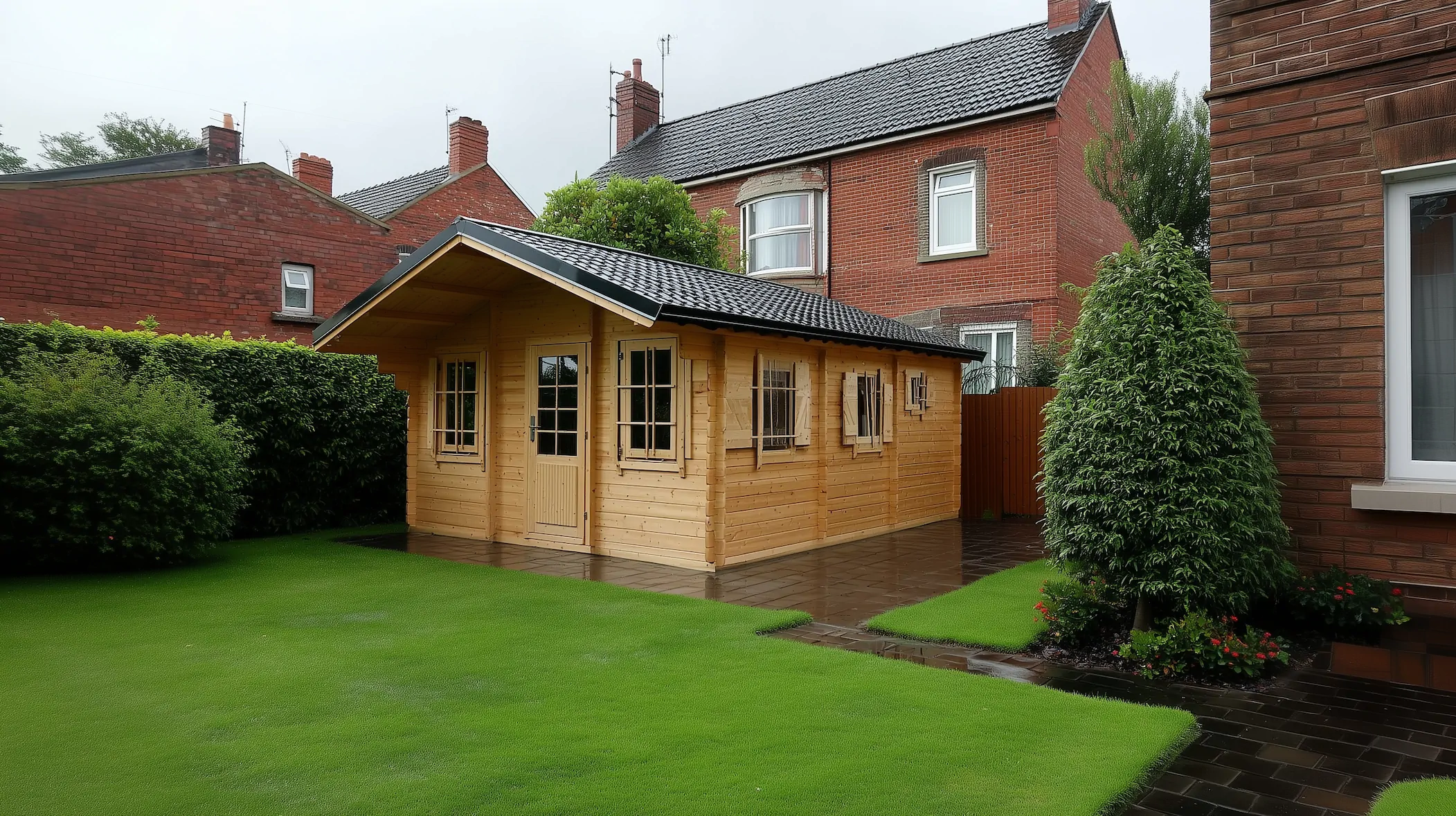
How much shelter the design gives it. A generous roof projection keeps rain off the walls, which is exactly why we build them — see the benefits of a roof overhang. Cabins with deep overhangs and working guttering routinely go longer between coats than ones without.
Colour. Dark stains fade faster in strong sun; mid and lighter tones hold their appearance longer.
The First Few Years Matter Most
New timber is thirsty. Factory-applied base coats are designed to protect the boards in transit and through the first months on site, not to serve as a permanent finish. Applying the first proper maintenance coat within the first year or two — once the cabin has settled and the timber has dried to a stable moisture content — sets you up for a long, easy maintenance life afterwards.
Pay particular attention at that stage to end grain, cut ends around windows and doors, and the underside of board edges. Water gets into timber through end grain far faster than through a flat face, and those are the spots that shorten a cabin's life when missed. Our guide to how long a timber cabin lasts covers what else drives longevity.
The Signs That Say "Now"
Rather than working purely to a calendar, learn to read the building. Time to recoat when you see:
- Colour fading or patchiness, especially on the sunny side.
- A dull, chalky surface where the coating no longer sheds water — splash a little on and watch. If it soaks in rather than beading, protection has gone.
- Early flaking or lifting at corners, sills and around fixings.
- Grey or roughened timber anywhere the coating has worn through — deal with this promptly, before it goes deeper.
A ten-minute walk around the cabin each spring and autumn tells you everything you need to know, and it costs nothing.
Doing the Job Properly
The preparation matters more than the product. Wash the surface down and let it dry fully, clear cobwebs, algae and garden debris off the boards, lightly abrade where the old coat has gone rough, and mask glass and fittings.
Work in dry, mild conditions — not in direct summer heat, which flashes the coating off before it can soak in, and not in autumn damp. Two thin coats always outperform one heavy one. Finish by checking gutters and downpipes are clear, since a leaking gutter will undo fresh stain in a single winter; our guide to cabin roofing explains why that detail carries so much weight.
Do not forget the base of the walls, either. Timber that sits close to wet ground or gets splashed off a hard surface deteriorates faster than anything higher up, which is why the foundation and base you started with keeps mattering years later.
What About Inside?
Interior timber has a much easier life — no rain, no UV. The internal finish is about appearance and cleanability rather than protection, and a refresh every decade or so is plenty. The one job worth staying on top of inside is ventilation: moist air condensing on cold surfaces does more harm than any amount of use, and our guide to stopping condensation in a garden cabin covers the habits that prevent it.
Our Honest Advice
Treating a cabin is a weekend job every few years, not a chore every spring. Budget a few hours and a good breathable stain, do the exposed side more often than the sheltered ones, and the building will look after itself for decades.
As family-run timber cabin specialists working with customers across the UK, we help from first idea through design, delivery, installation and final use — and we would always rather talk maintenance through with you at the design stage, because a deep overhang, the right timber and a sensible colour choice mean far less work later.
Planning a cabin you will not be fighting to maintain? Have a look at the timber cabin collection, then request a quote and we will talk you through the finish options and what each one asks of you over the years.