
How Do You Keep a Garden Cabin Secure?
How Do You Keep a Garden Cabin Secure?
It is a question that usually arrives late in a project, once someone has worked out what is going to live inside the building — a work laptop and two monitors, a bike collection, gym equipment, or a bed that visiting family will sleep in.
The honest answer is that a garden cabin can be made genuinely secure, but it happens in layers rather than through one heroic lock. The fabric of the building, the door and window hardware, what you can see from the house, the lighting, and the habits of whoever uses it all contribute. Get three or four of those right and a garden cabin is no softer a target than a ground-floor room in the house.
Start With the Building Itself
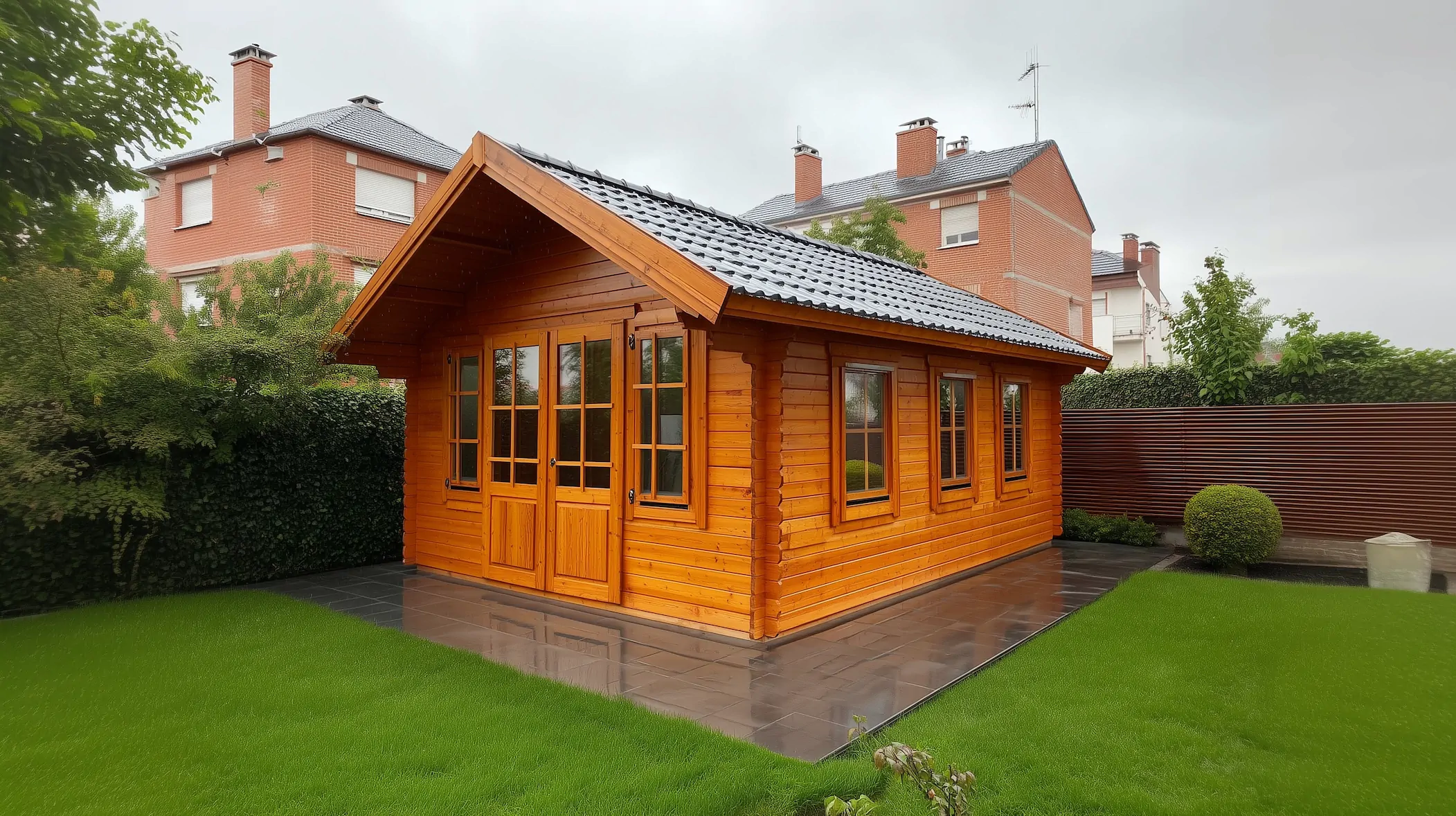
Security starts with structure, and this is where solid timber earns its keep. A cabin built from substantial machined timber walls with a properly fixed roof and floor behaves very differently from a thin panelled shed — there is simply nothing to lever apart or kick through. Our guide to what solid timber interiors actually change explains why wall thickness matters for more than just insulation.
Two structural details are worth insisting on at the design stage:
- A door that is hung properly in a solid frame. Most forced entries are about the frame giving way, not the lock failing. A well-fitted door in a substantial frame, with hinges that have security pins or bolts, is the single biggest improvement you can make.
- A floor and base that leave no gap to work with. A level, well-built base means the building sits tight to the ground with no crawl space and nothing to prise. It is another reason to get the foundations right before the build.
Doors, Locks and Glazing
Specify the door hardware for the contents, not for the building. For a cabin holding real value, a multi-point locking door with a good cylinder is worth the modest extra cost, and it is far cheaper fitted from new than retrofitted later.
Windows deserve the same thought. Double glazing in decent frames with key-lockable handles is standard on our cabins for comfort reasons, and it happens to be a meaningful deterrent too. Where a cabin is out of sight of the house or the neighbours, consider limiting the number of large opening windows on the hidden elevation and putting the glass where it faces you instead.
Shutters and lined blinds do quiet, useful work here. Not being able to see a desk full of equipment from the back fence removes the temptation before it forms.
Power, Lighting and Alarms
If you are running services out to the cabin anyway, the security kit costs very little on top. This is exactly the sort of thing to plan alongside fitting utilities to a timber cabin, because trenching once is far easier than trenching twice.
Lighting. A PIR-triggered light on the approach to the cabin, and a low-level light left on a timer, both change how a garden reads at night. Dark, unlit corners are the problem — not the building.
Alarms and cameras. A basic alarm with a visible sounder box, or a camera covering the door, is straightforward once there is power and a Wi-Fi signal reaching the bottom of the garden. Extending reliable Wi-Fi is usually the harder half of that job, so plan for it.
Keep the route visible. Trimming back a hedge so the cabin door is in view from a kitchen window costs nothing and does a surprising amount.
Insurance: Have the Conversation Early
Cover for outbuildings varies enormously between UK insurers and policies. Some home policies include a modest limit for contents in outbuildings, some require the building to be specified, and many attach conditions about locks, alarms or leaving high-value items overnight.
Because it depends entirely on your policy and what you are storing, the sensible step is to ring your insurer before the cabin arrives, tell them how it will be used and what will be kept in it, and ask what they need to see. It is a ten-minute call that occasionally changes the specification — and always beats discovering the answer after an incident. The same applies if you are letting the space out, where a different type of cover is usually needed; our guide to timber cabins for rental accommodation covers the wider considerations there.
Everyday Habits Do Most of the Work
The most common losses from garden buildings are opportunistic. Lock the cabin every time you walk back to the house, even for ten minutes. Keep bikes and tools out of sight rather than visible through glass. Do not leave a spare key under a plant pot next to the door. And if the cabin is your garden office, take the laptop indoors overnight — it removes the only thing worth taking.
Think about size and layout too: a cabin with sensible internal storage means less on show, which is worth factoring in when you are choosing the right cabin size.
Our Honest Advice
Decide what is going to live in the building before you specify it, then match the door, the glazing and the lighting to that. Retrofitting security to a finished cabin is possible but fiddly; designing it in adds very little to the cost.
As family-run timber cabin specialists working with customers across the UK, we help from first idea through design, delivery, installation and final use — and we would rather have the "what will you keep in it?" conversation at the drawing stage than after delivery.
Planning a cabin you can leave with confidence? Browse the timber cabin collection, then request a quote and tell us how the space will be used — we will spec the doors, glazing and services to suit.